

📃 ESPR (Ecodesign and Sustainable Products Regulation): What do we need to know?
Featuring examples from Fairphone, Kobo, Chilly's and more...

Here in Manchester where I am based, the temp has thankfully dropped to 16C today. I tuned into the news this morning hoping to hear some proposals from leaders on how to reduce temperatures in major cities, but instead much of the conversation centred around the inevitability and dangers of increased use of air conditioning. I wouldn’t dream of shaming someone who is faced with 38C in their apartment considering investing in an air con unit, but still hold out hope that more climate friendly solutions will be presented!
If you have been lucky enough to avoid the heat last week, have a read of this Substack written by someone in Paris to get an idea of what it has been like for Europeans facing the worst of it.
With many conversations centred around fans, air-con units, dehumidifiers and more obscure products like cooling blankets, what better time to look at Ecodesign and Sustainable Products Regulation?
Keep scrolling to discover:
An overview of ESPR - who is affected and how textile and apparel companies have already been preparing to comply
Repairability and recyclability elements of the regulation
How you can take action
A look at recent good news from the world of consumer goods x climate
> In Focus…
Regulation Watch: ESPR
Okay, this isn’t a new regulation (it entered into force in 2024)! Let’s start by refreshing our memory:
The Ecodesign for Sustainable Products Regulation (ESPR) is a European Union framework designed to make products sold in the EU more durable, repairable, recyclable, and energy-efficient throughout their lifecycle. It introduces stricter environmental requirements and a Digital Product Passport to improve transparency and circular economy practices across almost all product categories.
But from what we’ve seen it’s only really been on the radar for apparel brands since their industry has specific compliance requirements coming into play in 2027. But we want to put it on the radar for more of our readers, since the scope is pretty wide…
Who is affected?
This one is pretty straight forward. Even though it is an EU regulation, if you are selling products either directly or indirectly to the EU, then you must comply. The only notable exception is food! So no revenue thresholds or employee figures.
Why does it exist?
Back in 2020 the EU set out a Circular Economy Action Plan to help reach its environmental goals. The measures brought in through ESPR will hopefully help double the circularity rate of materials in use and help reach energy reduction targets.
You’re a clothing brand and this is the first you have heard of ESPR…
Sweating? It’s okay, we’ve got you covered. Here is what you need to know:
Destroying unsold textiles, clothing and shoes is now banned.
Medium and large businesses need to disclose on their websites the number and weight of items they have discarded every year, why they have discarded them and how much of that they reused.
Your products should have a Digital Product Passport (DPP). This is a unique identifier on your packaging that carries data about your product’s materials, design, microplastics, impact on the environment, how to repair, replace, maintain and finally reuse or recycle.
We did a little case study of early adopters of DPP back in 2024, read here to refresh your memory:
🌱Will incoming fashion regulations change the way we think about clothes?

Two brands that are staying ahead of fashion and already piloting DPP are Swijin and Marimekko.
Swijin have partnered with Avery Dennison to create a digital care label which carries manufacturer details, certifications, footprint data and care instructions to extend the life of the garment.
Marimekko have partnered with TrusTrace under a pilot programme called Trace4Value. The programme helped Marimekko identify the data they needed to gather to create a DPP for their closed loop t-shirt, the Erna.
Not in clothing and textiles? Here is what you need to know…
Coming up first (2027)
Repairability - If your product is not single use, then you should be considering the “horizontal” (meaning not product specific here) repairability requirements. Consider whether your product can be disassembled without damaging it, whether it be repaired using commonly available tools, whether the spare parts are accessible to buy and whether the instructions are accessible to your customers. The exact details and the scoring mechanism are still being finalised.
One brand that has repairability at the core of its mission is Fairphone. You can find a diagnosis tool as well as spares and instructions on their website. Fairphone comes out top on repairability scores created by company ifixit.
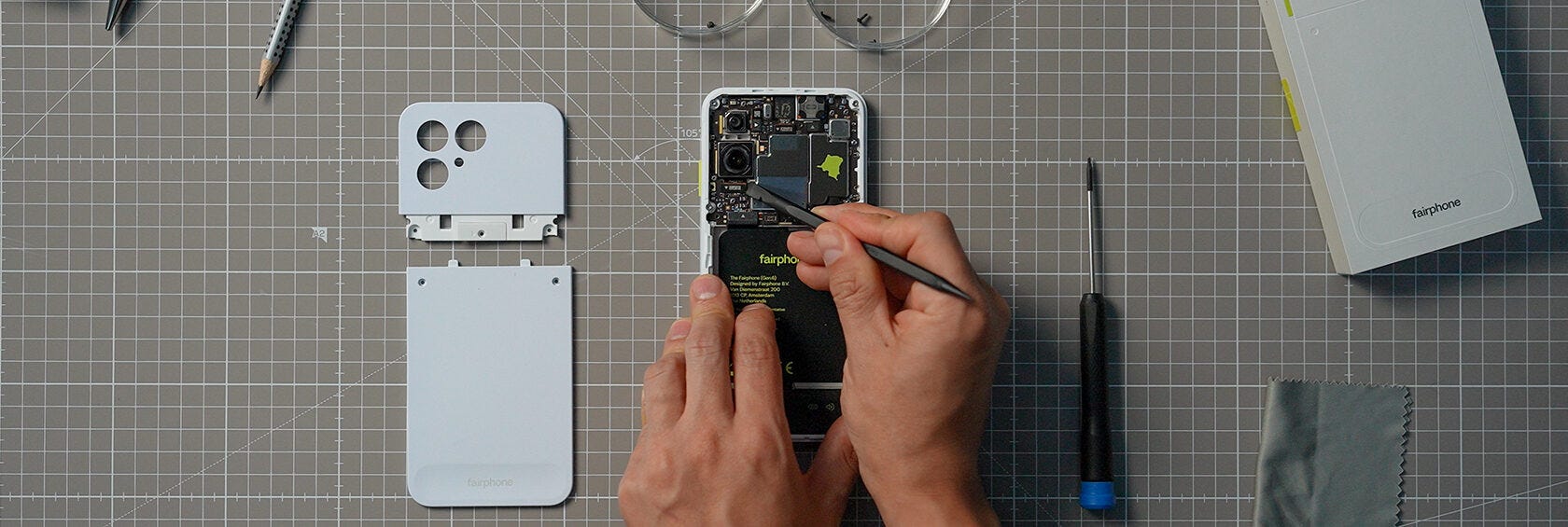
Another brand already taking steps here is Kobo. They have repair guides available for some of their e-readers. Their ifixit score is impacted by bits that aren’t removable, like the USB port for example, which should give you an idea of how products might be evaluated.
Coming up next (2029)
Recyclability and Recycled Content - Unsurprisingly being able to take a product apart safely also lends itself well to recyclability. Taking a longer view you should also consider how reusable/recoverable/recyclable each component is. For example, you may be able to easily remove a strap on a bag to replace it, but how easy is it to recycle that strap? Though, saying that, it does appear that electronics are a priority for this element of ESPR!
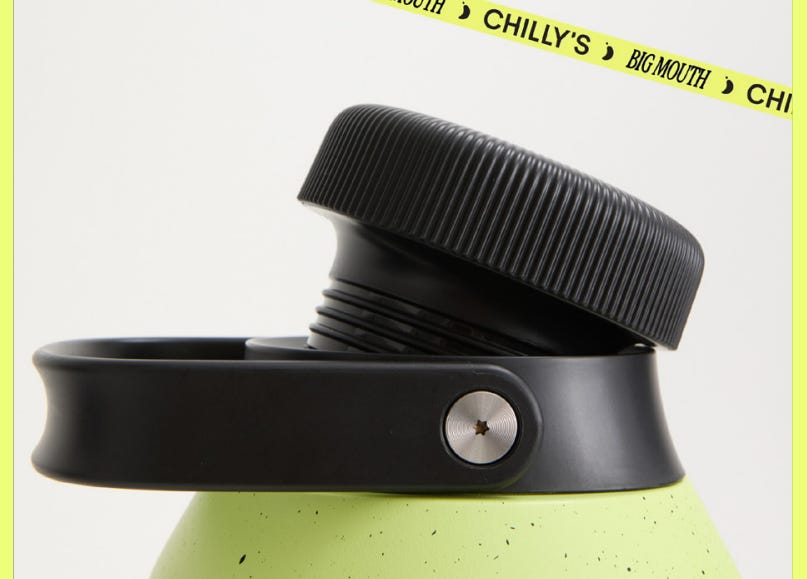
Chilly’s announced a couple of years ago that they were switching to verified 90% post-consumer recycled stainless steel (the standard they verified to is ISO 14021:2016). Since this is the largest part of their product and they had research showing that this will reduce their carbon footprint, it seems like they picked a great place to start. When it comes to recyclability, they recently reported that they have innovated the PP lids of their Big Mouth bottles to replace the hard-to-recycle insulating material polystyrene with expanded polypropylene. Now this element can be recycled in a single recycling stream.
Why should you get your compliance hat on now?
Reason 1: Trusted reviewers, e.g. this article in the Guardian, are already reviewing repairability alongside other criteria when recommending products.
Reason 2: Lengthening the lifespan of a product increases its lifetime value and smart companies like Finesterre and Brooks Running are offering their customers a chance to buy their products second hand.
Reason 3: In the long-term, we hope to see that the investment brands make into the longevity and circularity of their products drive down their WEEE and EPR costs.
Reason 4: As highlighted by Chilly’s in their Responsibility report, investment in PCR content can lead to GHG emissions reductions. In terms of brand reputation, hitting those targets and showing a genuine commitment to environmental protection can’t be bad right?
> Resources to follow up with:
Handy resources from FTF team member Indira!
Cradle to Cradle Certified
If you are already thinking ahead about what else you could do or wondering what more you could achieve beyond being compliant with ESPR, Cradle to Cradle certification is a good one to look into! It builds on the ESPR foundation, by pushing for continuous improvement and measurable thresholds across a product’s full lifecycle.
This can help you build habits and documentation that help you stay ahead as ESPR’s sector-specific delegated acts roll out in the coming years, as data and processes needed for the certification overlap closely with the regulatory requirements - while keeping the door open for creative product innovations too!
ISO 59000 on the Circular Economy
This is a new ISO standard that is designed to foster a shift towards the circular economy. The standard offers guidance on implementation of the key circular economy themes, such as value creation, resource management and systems thinking - and also provides information on data acquisition and measurement methods for reporting related to the circular economy.
This is particularly relevant for ESPR reporting as it gives you guidance on how to provide robust and verified data on product durability, repairability, maintenance and recyclability. Especially for ISO59040 where it provides interoperability of circular economy related information through the Product Circularity Data Sheet (PCDS). This connects directly to the ESPR’s DPP - tracking product data throughout its lifecycle. Aligning your data structure with an international standard like ISO 59040 now is a practical way to get ahead of DPP compliance requirements!
> Last week in consumer goods x climate…
The Good(s) News
V Spirits Brands, which produces V Rum has achieved B Corp certification.
Finisterre launched their latest impact report 👀 In it they go into some amazing detail about their Preferred Materials Framework and some really interesting collaborations including ones with Bureo, VEJA and The Or Foundation.
Eye-catching and designed for recyclability, Flavourfresh Salads Limited partnered with Paranova Print and Packaging to showcase their special edition Tomalina tomato range in a paper based punnet. The packaging is designed for speed, plastic reduction and compatibility with existing recycling infrastructure. 🍅🍅
DS Smith, RE-ZIP and RAJA Group are collaborating to trial run a reusable paper-based packaging concept and system for e-commerce. Their goal is to promote the reuse of 250,000 packages in the space of a year. They will pick 20 brands to trial the Reuse Fast Track system next month. 📦♻️
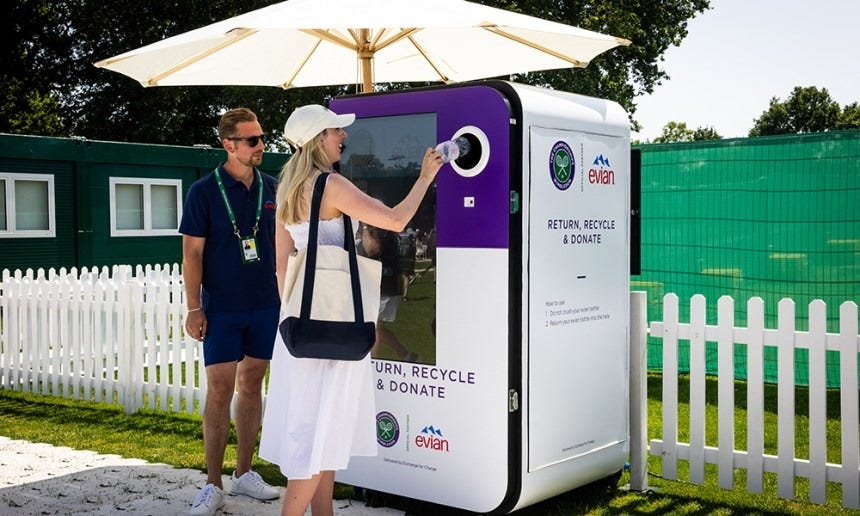
Danone and Exchange for Change will be at Wimbledon this year trialling a new deposit return vending machine. They hope it will demonstrate the ease of returning your bottles as well as gather valuable insights ahead of the rollout of DRS nationally.
Have good news? Share it with us - info@followingthefootprints.com!
We are keen to hear from brands preparing for ESPR - your frustrations, successes, data nightmares, all of it! Comment below or shoot us a message.
Until next time!